

In Kenya‘s Maasai Mara, wedding drums now echo late into the night. At the Kakuma refugee camp, a small cinema can finally screen an entire football match without going dark. In rural villages, children can read long after sunset. Behind these changes is the quiet spread of off-grid solar systems across East Africa.
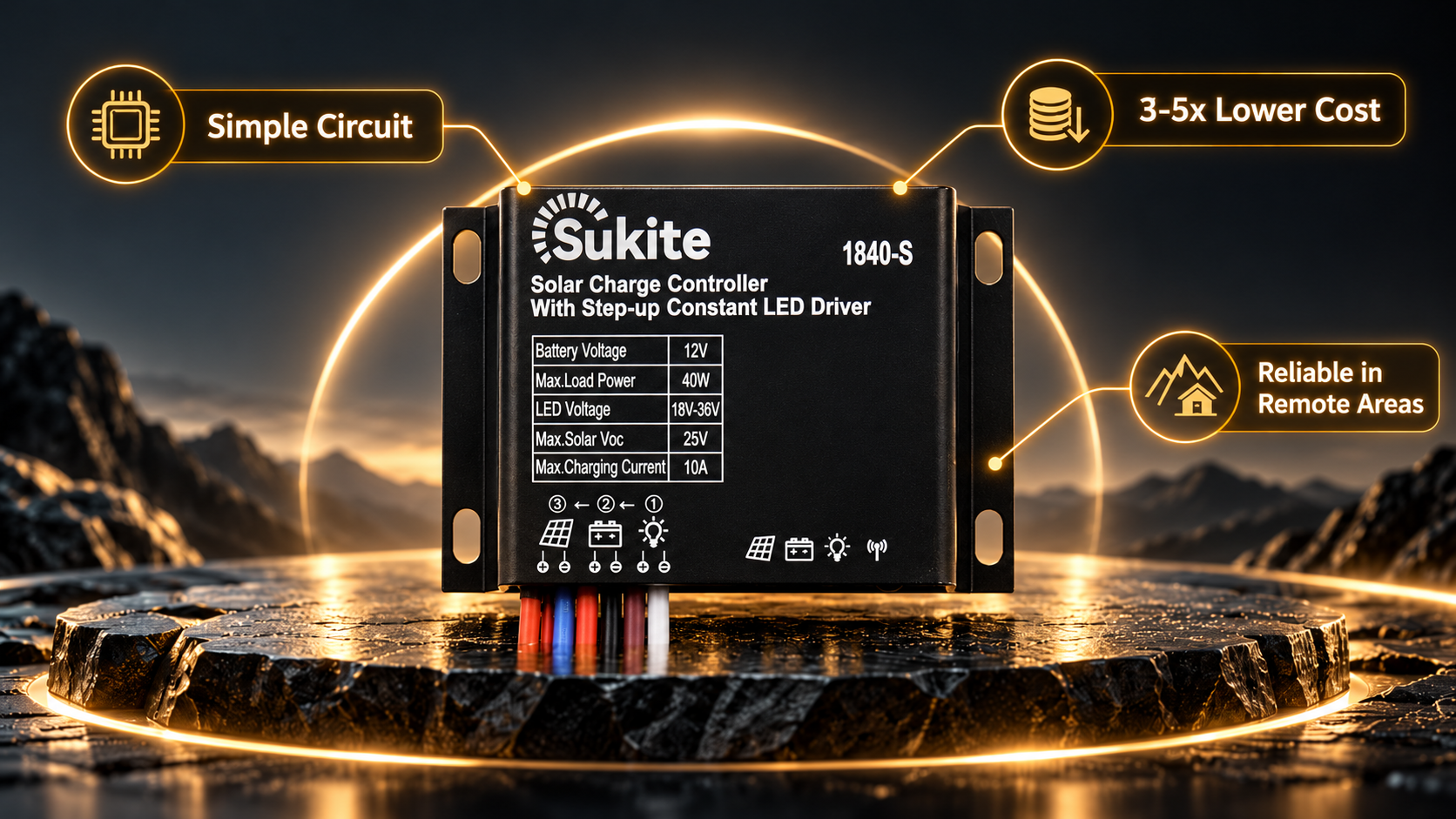
But few notice that what makes these systems truly reliable is not the solar panel itself, nor the battery — but a palm-sized device: the solar charge controller.
It doesn’t generate power, yet it determines whether that power can be safely stored in the battery. It doesn‘t emit light, yet it determines whether the lights come on when the sun goes down. In an off-grid solar system, the controller is the invisible brain — users never see it, but without it, the entire system fails.
In an off-grid solar system, the solar panel generates power, the battery stores it, and the controller manages the entire flow of energy.
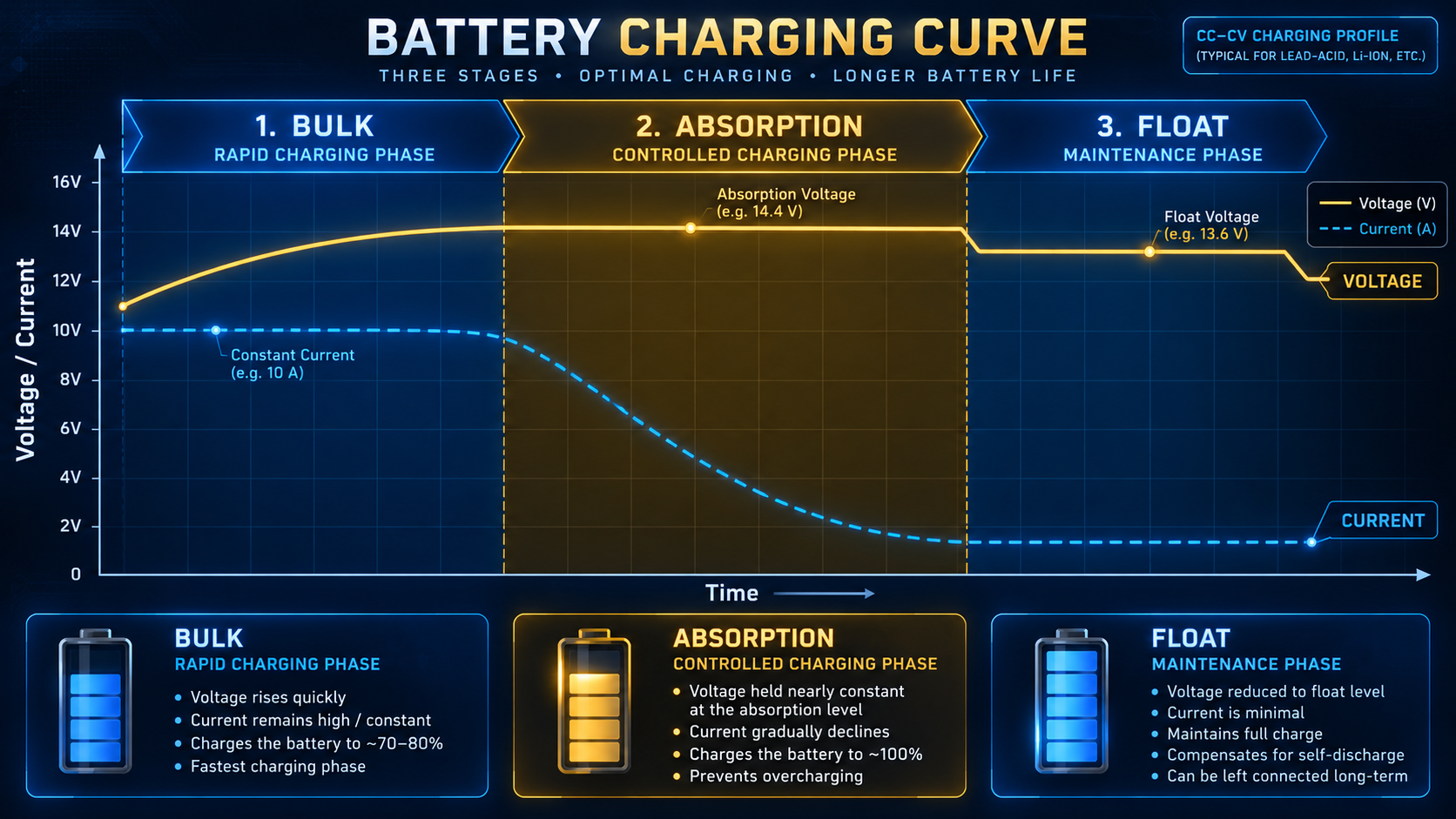
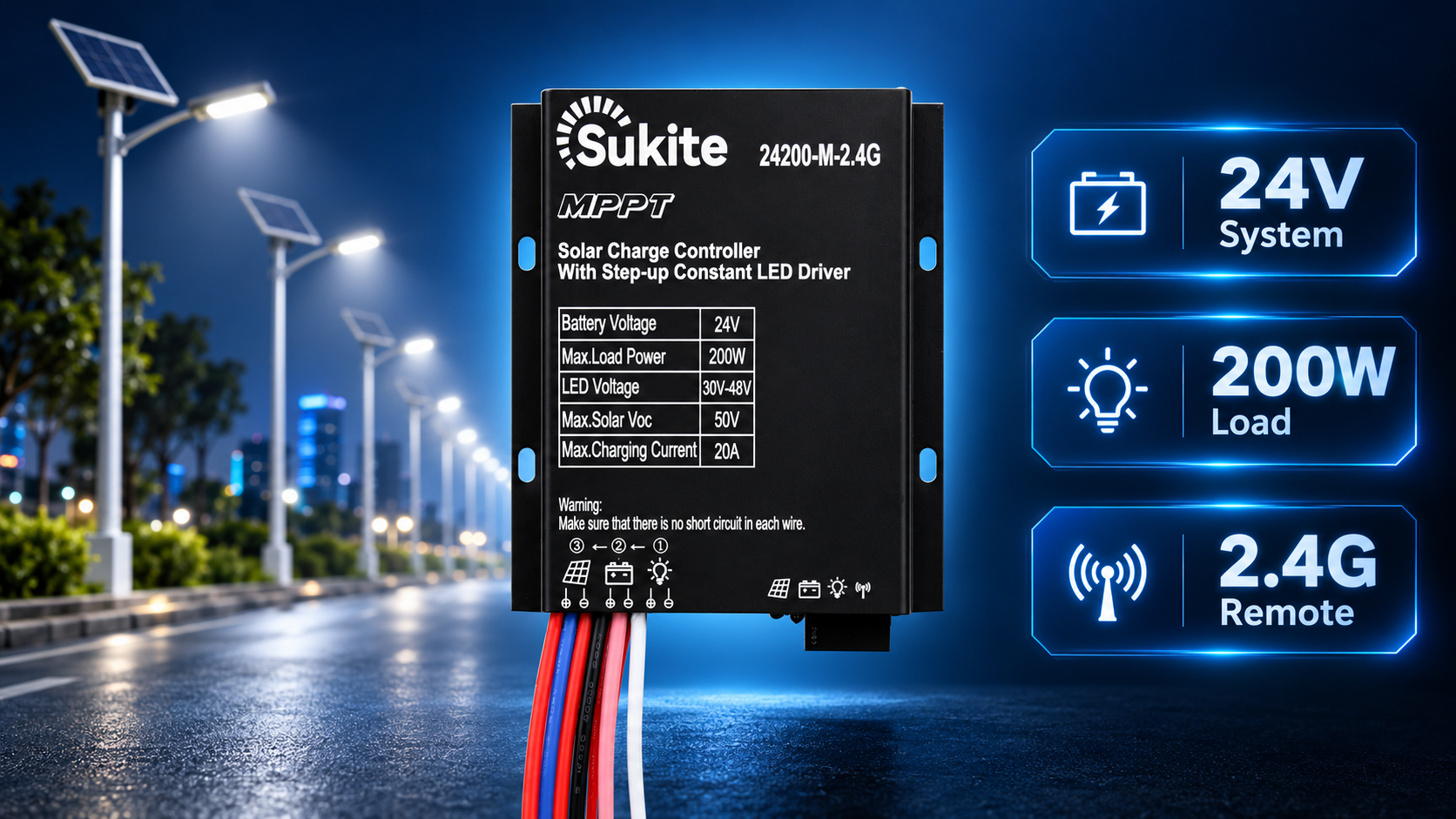
Its core tasks include: preventing battery overcharge and over-discharge to extend battery life; blocking reverse current at night to avoid energy loss; tracking the solar panel’s maximum power point through MPPT algorithms to improve charging efficiency by 20% to 30%; and providing stable voltage output at the load terminal to ensure safe operation of LED lights, phone charging stations, and communication equipment.
For remote communities in Kenya, controller reliability directly determines the system‘s service life and user experience. A controller that can operate continuously for years under equatorial sun, dust, heat, and humidity delivers not just stable power, but also trust in off-grid solar systems.
As Simon Masago, a community chief in the Maasai Mara, put it: “For us, ‘plug and play’ matters more than any technical parameter.” This simple statement captures the core competitiveness of controller products in the off-grid market: simple, reliable, durable.
Kenya’s off-grid solar market has a distinctive characteristic: users are highly price-sensitive but demand extreme reliability.
According to the World Bank and GOGLA‘s 2024 Off-Grid Solar Market Trends Report, off-grid solar is the most effective way to reach unelectrified populations. In Kenya alone, approximately 13 million people still lack electricity access, and the government’s “Kenya Off-Grid Solar Access Project” aims to build 151 micro-grids serving 277,000 households.
In this market, controllers face several demanding tests:
Environmental adaptability: Kenya sits on the equator, where high temperatures, dust, and seasonal rains impose extreme requirements on electronic equipment protection ratings. A controller with insufficient protection may fail within the first rainy season.
Ease of operation: Users in remote communities do not need complex parameter settings or commissioning procedures. They need products that work as soon as they are connected. Controllers requiring additional accessories or complex configuration have virtually no competitiveness in this market.
Cost controllability: For families with irregular incomes, the upfront cost of energy equipment is a significant barrier. Kenya‘s widely used M-Pesa “Pay-As-You-Go” model has proven that reducing initial costs significantly increases solar adoption. As a core system component, controllers must be reasonably priced while maintaining reliability.
Long-term stability: Once installed, off-grid systems often need to operate continuously for years. Frequent controller failures not only affect user experience but also drive up after-sales maintenance costs and damage brand reputation.
For Chinese solar charge controller manufacturers, the signal from Kenya and the broader East African market is clear:
The market needs a “reliable brain,” not a “cheap component.” In off-grid solar systems, the controller accounts for only a small fraction of system cost, yet it determines whether the entire system can operate stably over the long term. Users may not remember the controller brand, but they will certainly notice whether the lights come on, whether phones can be charged, and whether children can read at night.
“Plug and play” is the highest product praise. In remote communities with limited installation and maintenance conditions, controllers must be ready to use out of the box, with simple wiring and no complex commissioning. This is not a lowering of technical standards — it is a higher demand on product design.
Adapting to harsh environments is the baseline. Wide operating temperature ranges, high protection ratings, and resistance to vibration and moisture are not bonus features — they are the entry barrier for the African market.
Localized service is long-term competitiveness. Controller manufacturers that can provide local technical support, partner with local distributors, and understand the real needs of communities will build lasting advantages in this market.
In the story of off-grid solar in Kenya, the solar panel “generates,” the battery “stores,” and the controller “manages.” All three are essential — but the controller is the one that determines whether the system is truly usable.
For controller manufacturers deeply engaged in the off-grid market, East Africa is not just a growing market. It is a proving ground for product reliability. Here, technical parameters matter less than this simple standard: “Plug it in, and it works — and it keeps working.”
Data Sources: Xinhua News Agency, Outlook Weekly (Xinhua), World Bank/GOGLA 2024 Off-Grid Solar Market Trends Report, and publicly available industry research.
Fill out the form below and our team will get back to you within 24 hours.
Your inquiry has been submitted successfully. Our team will contact you within 24 hours.