

According to market research firm 360iResearch, the global solar charge controller market is projected to reach $4.36 billion** in 2026, growing at a compound annual growth rate (CAGR) of approximately **19.17%** from 2025 to 2032, with the market expected to reach **$12.66 billion by 2032. Within this rapidly growing market, Maximum Power Point Tracking (MPPT) controllers have captured approximately 62% of global market share, essentially completing their mainstream replacement of traditional PWM controllers.
MPPT controllers have rapidly achieved market dominance primarily due to their significant technical advantages. Compared to PWM controllers, MPPT controllers can improve charging efficiency by 20% to 30% , making them particularly suitable for scenarios with variable sunlight conditions such as off-grid solar systems and mobile solar equipment. This efficiency advantage is especially pronounced in medium-to-large solar systems, making MPPT the preferred solution for residential, commercial, and industrial applications.
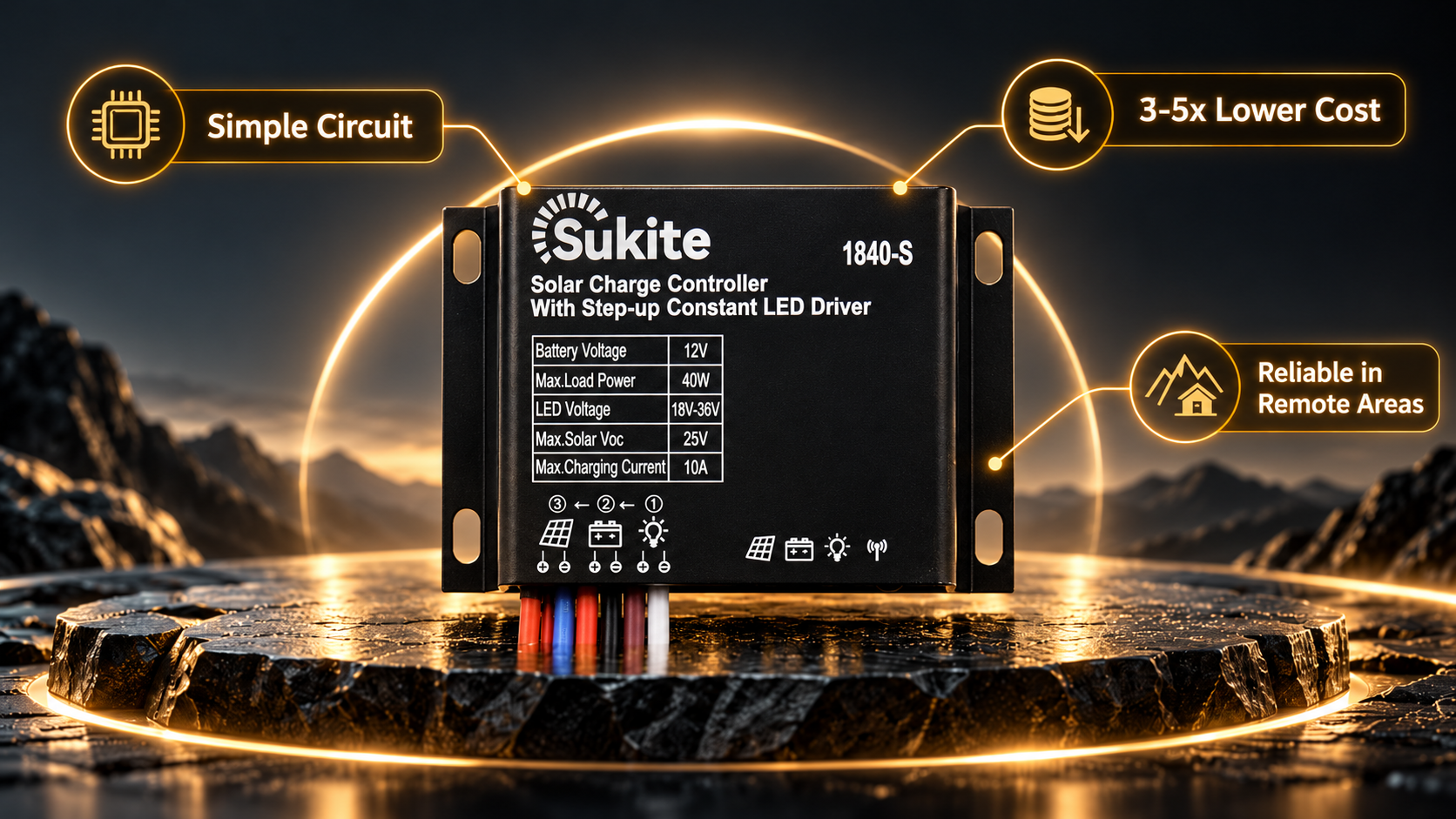
Currently, the average selling price of MPPT controllers is 3 to 5 times that of PWM controllers, creating a “volume and price rising together” market dynamic. MPPT controllers dynamically track the solar panel‘s maximum power point in real time, adjusting output voltage and current to maximize energy conversion efficiency while preventing overcharging, over-discharging, and short circuits. This technology premium is increasingly being accepted by end users.
The rapid growth of the solar charge controller market is driven by multiple factors. Global renewable energy policy promotion, the rapid development of distributed solar generation, the growing adoption of off-grid solar systems in remote areas, and rising demand for portable solar devices in outdoor and emergency scenarios are collectively driving market expansion. Additionally, continued declines in solar product costs and growing consumer awareness of energy conservation and environmental protection are further fueling market demand.
From an application perspective, MPPT controller demand is primarily distributed across three major areas: residential applications, commercial and industrial applications, and remote area power supply. Among these, the commercial sector is witnessing a surge in distributed solar systems, with businesses adopting solar rooftops to achieve sustainability goals, driving continued growth in demand for charge controllers.
From a regional perspective, Asia-Pacific accounts for approximately 45% of global solar charge controller demand, making it the largest regional market. China, with its strong manufacturing capabilities and large-scale solar deployment, is both the world’s largest production base and one of its largest consumer markets.
In terms of competitive landscape, the global MPPT solar charge controller market is led by brands including Phocos, Morningstar, Victron Energy, and Renogy, alongside Chinese manufacturers such as Huineng Jingdian, Shuori New Energy, and Yuanfang Power. Market concentration is relatively fragmented, with no single company holding absolute dominance — providing continued competitive space for manufacturers with technological innovation capabilities and cost advantages.
The continued increase in MPPT controller market share reflects a deeper transformation of the solar industry from “scale expansion” to “efficiency first.” As solar module efficiency continues to improve and energy storage demand grows, the market‘s requirements for energy management precision and system reliability are rising. MPPT controllers are no longer an “option” — they are standard equipment for efficient solar systems.
Meanwhile, PWM controllers still retain some market space in low-power, cost-sensitive applications, but their overall share is gradually contracting. The industry’s competitive focus has shifted from “low-cost PWM volume” to “high-efficiency MPPT value competition,” with product performance, intelligence level, and long-term reliability becoming key differentiators.
A $4.36 billion global market and a 19.17% CAGR confirm the strategic value of solar charge controllers as a core component of PV systems. With MPPT technology completing mainstream replacement at 62% market share, the industry has entered a new phase where “efficiency is king.” For controller manufacturers, continued deep cultivation of MPPT technology and improvement of product reliability and intelligence will be key to capturing this growth opportunity.
Data Sources: 360iResearch, Fortune Business Insights, QY Research, Global Info Research, and other publicly available industry research reports.
Fill out the form below and our team will get back to you within 24 hours.
Your inquiry has been submitted successfully. Our team will contact you within 24 hours.