


Africa is on track to install a record 17 GW of solar capacity in 2026, up 45% year-on-year, marking the continent‘s third consecutive annual record, according to new analysis by energy think tank Ember in collaboration with African Tech Futures Lab. This growth rate translates to approximately 100,000 solar panels installed across Africa every day, with the new capacity generating around 23 TWh annually — enough to match the continent’s average annual electricity demand growth over the past decade.
Unlike other markets dominated by utility-scale plants, the protagonist of Africa‘s solar boom is distributed solar. Ember estimates that of the 26 GW of solar installed across Africa between 2023 and 2025, approximately 75% (around 20 GW) came from distributed systems — primarily rooftop solar and customer-side installations.
This characteristic means much of Africa‘s solar growth remains “invisible” in official statistics. Ember notes that its 2025 estimate of 12.0 GW is nearly double the International Energy Agency’s figure of 6.2 GW, while IRENA‘s data shows only 4.6 GW. Currently, only South Africa, Tunisia, and Tanzania publish solar data quarterly or more frequently, and only 36 of Africa’s 54 countries have official solar capacity records — with just 14 covering 2025 data.
“It‘s incredible to see so many companies and individuals, in so many African countries, choosing to install solar power,” said Dave Jones, Chief Analyst at Ember.
The geographic distribution of Africa’s solar growth is undergoing a fundamental shift. In 2026, 36 of Africa‘s 54 countries are expected to install record solar volumes, with 19 countries seeing year-on-year growth exceeding 100%. The Democratic Republic of Congo leads with 544% growth, followed by Zimbabwe (282%), Egypt (176%), and Zambia (117%).
South Africa, once responsible for over half of the continent’s solar imports, will see its share drop below 20% in 2026. In 2026, South Africa is projected to add 3.3 GW, Egypt 2 GW, Nigeria and DRC 1.7 GW each, Algeria 1.4 GW, and Morocco 1 GW.
“Solar panels have become so cheap that the economic equation is compelling,” Jones noted. This cost decline is shifting Africa‘s solar growth from “policy-driven” to “market-driven” — with private buyers increasingly choosing distributed solar and storage as an alternative to unreliable grids and costly diesel generation.
Despite rapid growth, Africa’s energy access gap remains staggering. Nearly 600 million Africans still lack access to electricity. In Francophone West Africa, rural electrification rates in some areas are as low as 2% to 10% .
In its latest report, IRENA states that in Benin, Burkina Faso, Côte d‘Ivoire, Guinea, Mali, Niger, and Senegal, decentralized renewable energy can play a “more central role”. The report emphasizes that Francophone West Africa needs more than just “connections” — it needs reliable services that can sustain healthcare, water supply, food systems, and early warning functions under climate stress.
IRENA’s analysis shows that most adaptation services in the region require Tier 3-4 capacity and Tier 4-5 availability and reliability, while the dominant solar home systems typically deliver only Tier 1-2 service levels. This gap means that simple “electrification” is not enough to build climate resilience — systems need sufficient capacity, availability, and reliability to support essential services.
For solar charge controller manufacturers, Africa‘s explosive solar growth sends clear signals:
Off-grid and distributed systems are the core demand scenario for controllers. Unlike centralized plants, distributed systems require controllers in large quantities, albeit dispersed. Every rooftop solar system, every off-grid telecom tower, and every solar water pump needs a controller to manage energy flow.
“Reliable service” matters more than simple “electrification.” IRENA’s report reveals a critical trend: Africa‘s off-grid market is shifting from “is there power” to “is the power sufficient and stable enough.” As the component that determines whether a system can operate reliably, the controller‘s quality directly affects the quality of end-user services.
Harsh environment adaptability is a rigid threshold. Africa’s high temperatures, dust, and unstable grid conditions impose demanding requirements on controllers for wide operating temperature ranges, protection ratings, and interference resistance. Controllers that maintain stable output in environments above 45°C will gain a significant competitive advantage in the African market.
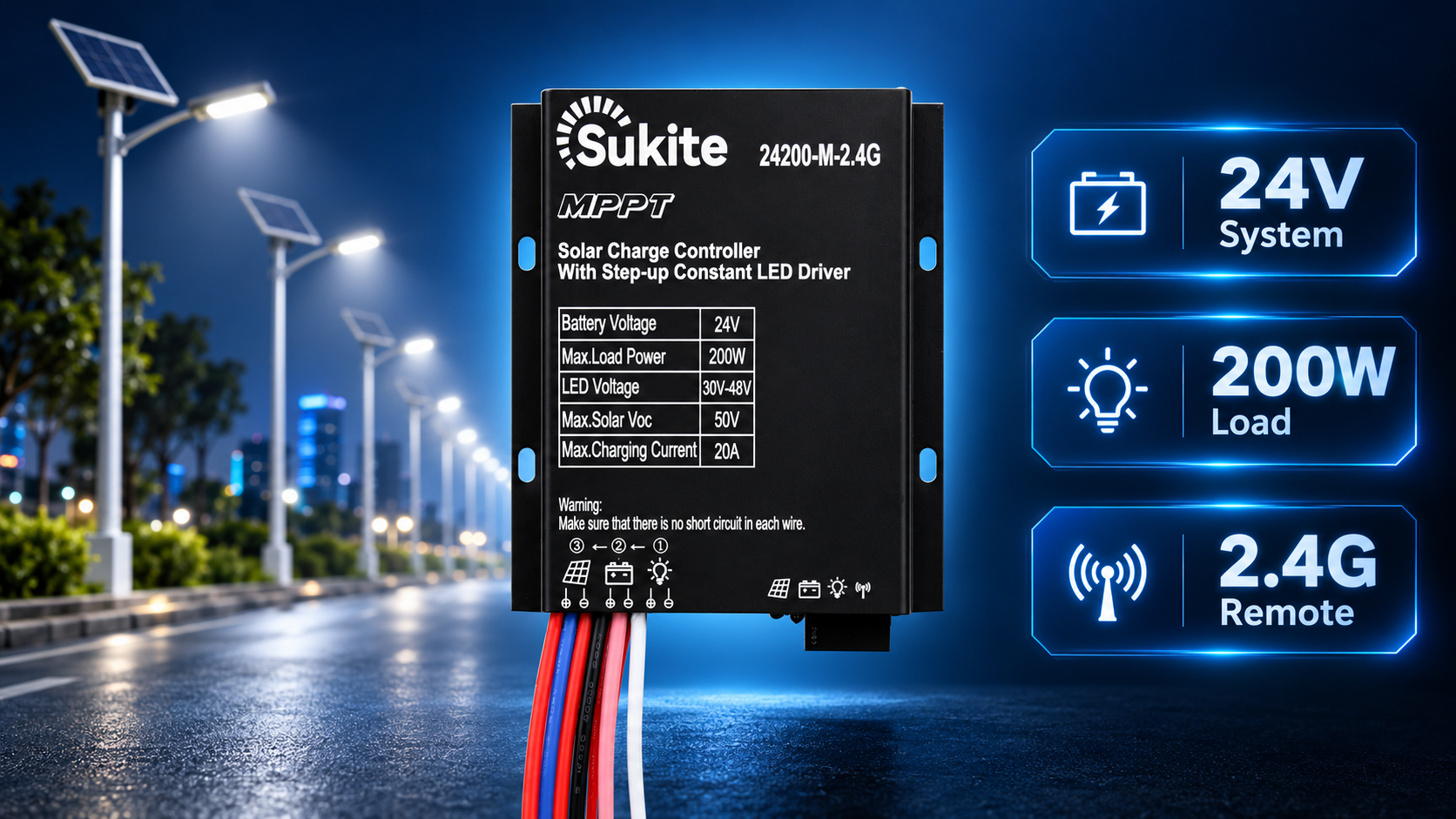
Remote monitoring capability becomes essential. Africa‘s distributed solar systems are highly dispersed, making O&M challenging. Controllers with IoT connectivity and remote monitoring capabilities can dramatically reduce maintenance costs and improve system availability.
17 GW of annual installations, 45% growth, 100,000 panels installed daily — Africa is experiencing an “invisible” energy revolution driven by distributed solar. The driving force is not policy planning, but economic logic: when solar is cheaper than diesel and more reliable than the grid, the market makes its own choice.
For controller manufacturers, the opportunity in Africa is not about “selling more products,” but about “keeping every system running reliably.” In the transition from “electrification” to “reliable service” in off-grid electrification, the controller is precisely the “brain” that determines success or failure.
Data Sources: Ember & African Tech Futures Lab joint analysis, IRENA Powering climate resilience in Francophone West Africa, World Bank Mission 300 Progress Report.
Fill out the form below and our team will get back to you within 24 hours.
Your inquiry has been submitted successfully. Our team will contact you within 24 hours.